

Due to stress, one may not see acne or premature aging signs, right?

As you’re reading this article, I can understand you have access to technology, which allows you to watch any video or search for any information on the internet. Life is much easier now than before. Yet, we all experience some level of stress. And the stress affects our mental health as much as it affects our skin. For example, due to stress, we may experience acne or premature aging signs, along with various other skin problems. Today, we’ll discuss how stress affects the skin and how we can reduce stress.
Why does stress happen?
Stress can occur in various ways. For example, environmental or temperature changes (external factors). Suppose you were in a cold room for a long time. Suddenly moving to a hot environment can cause stress on your body. Additionally, economic conditions, academic pressure, family problems, etc., can cause psychological stress.

Stress is something we cannot avoid entirely; it’s an integral part of everyone’s life, and some may face it more than others. Our ability to cope with stress varies. It depends on genetics, how we were raised, and the challenges we’ve faced in life. As stress negatively impacts mental health, it also affects our skin.
Why do acne or other skin problems occur due to stress?
Stress affects our skin in various ways. It can make the skin extra sensitive, leading to acne or premature aging signs. Let’s explore some effects of stress on the skin:
1) Increased chance of acne
When you’re under environmental stress, your body produces cortisol, a stress hormone. This hormone is crucial for the body as it performs several functions. For example, it increases blood sugar, enhances sugar use in the brain, makes the brain more active, and increases tissue repair. However, an increase in cortisol levels can lead to other issues. For instance, it can lead to increased sebum production on the skin. More sebum production means clogged pores and acne breakouts.
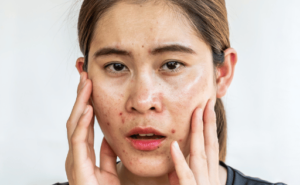
Isn’t it strange? On one hand, stress causes increased acne, and on the other hand, seeing acne causes more stress. It’s a peculiar cycle, isn’t it? Those whose skin naturally produces more oil due to stress tend to see more acne. However, if all types of skin show acne due to stress, it’s a bit challenging to accept, isn’t it?
2) Increased skin sensitivity
Stress significantly affects the immune system. Over time, stress reduces the skin’s immunity. This can lead to skin problems like eczema, a skin disorder that makes the skin highly allergic. Along with that, large bumps can be seen on the skin.
3) Premature aging signs
We know that the anti-aging process delays the oxidation process. On the other hand, the pro-oxidation process speeds up. When we’re under chronic stress, our body’s powerhouses, called mitochondria, produce more Reactive Oxygen Species (ROS). These actually cause oxidation – damaging cell tissues, even affecting internal organs.
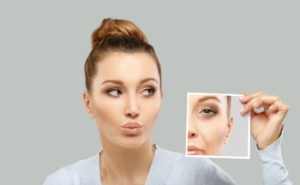
A crucial cell in our body is the macrophage. When these cells get damaged, they aggregate them. Due to frequent damage to macrophages, we may see premature aging signs on the skin. So reducing chronic stress is essential.
4) Psoriasis problems
Due to stress, our immune system doesn’t function properly. Then, the immune system attacks the skin cells and psoriasis occurs. This problem increases with time, leading to Scaly Lesions on the skin. Skin disorders, infections, allergic problems, can worsen, causing this disease. Stress further triggers this problem. So, the higher the stress level, the more likely you are to see psoriasis or more Scaly Lesions.
5) Atopic dermatitis or eczema
As mentioned earlier, stress causes the production of pro-oxidants and simultaneously the immune system tends to go down. And this problem causes eczema or atopic dermatitis. Along with that comes constant scratching. So if you don’t reduce stress and start taking care of your skin now, skin infection can also occur.

How can we reduce the effects of stress?
Everyone experiences stress in life. It’s not entirely avoidable. However, we should try to handle it for our well-being. Here are a few ways:
1) Take care of your skin regardless of how tired or stressed you are.
2) Exercise regularly. It’s not only beneficial for the skin but also for the body.
3) Allocate at least 10 minutes a day for yourself. Read a book, watch a movie, or spend some extra time in the shower.
4) When you can’t find a solution to something, take a short walk.
5) Practice stress management techniques like breathing exercises, yoga, meditation, or simply enjoying relaxing scenes in nature.
6) Get enough sleep. Aim for at least 7-8 hours of sleep every night.
7) Don’t hesitate to seek help from friends or professional therapists to relieve stress.

Stress doesn’t just affect mental health; it also harms the skin. So, try to keep yourself away from excessive worries and disappointments. How do you feel when you see acne, premature aging signs, or other problems due to stress? Take care of yourself.